


Description
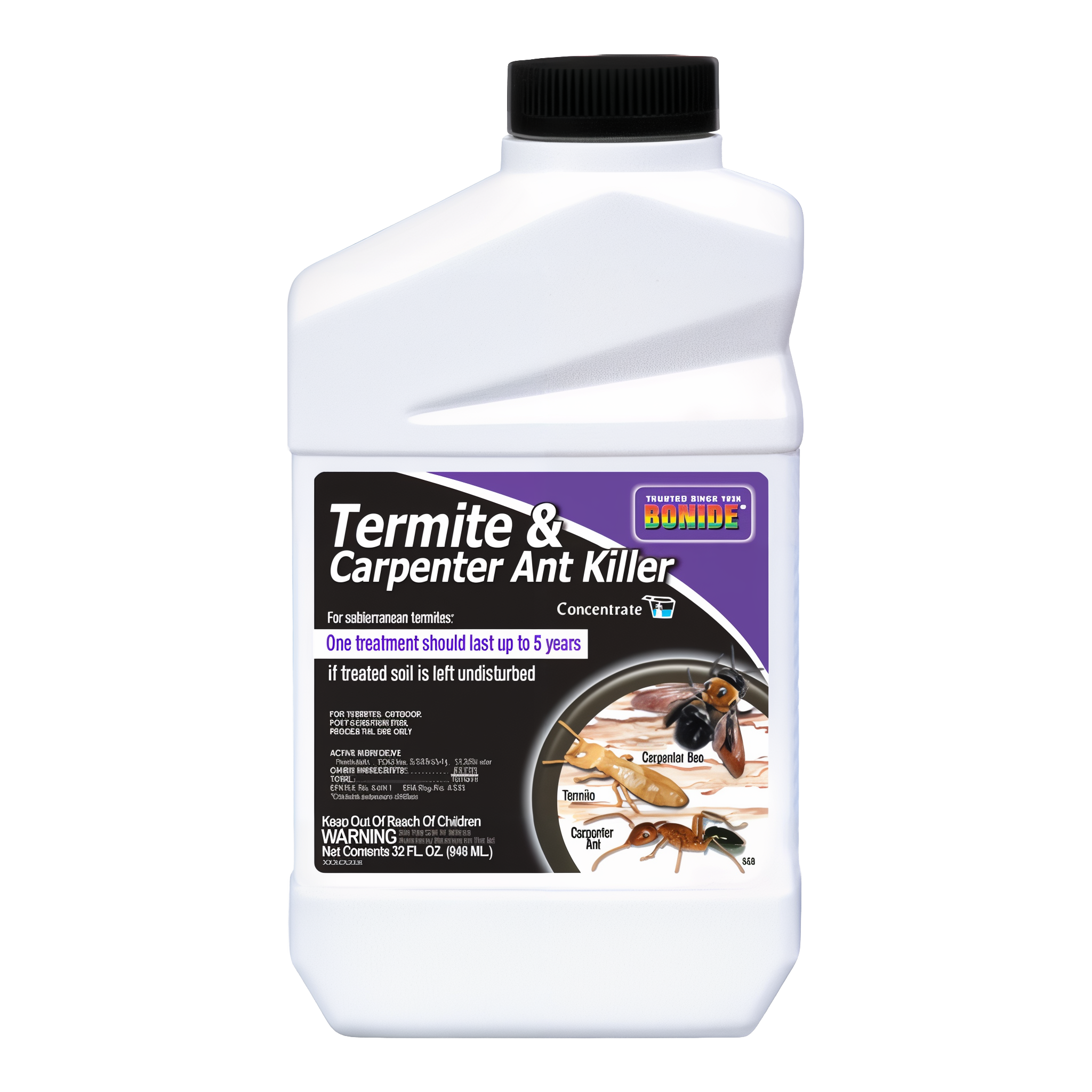
Bonide Termite & Carpenter Ant Killer Concentrate is a 32 fl oz bottle of permethrin-based liquid concentrate, designed to be diluted with water and applied around the perimeter of existing residential structures. Headline use is post-construction subterranean termite trench treatment (one application can last up to 5 years if treated soil is left undisturbed) and carpenter ant / carpenter bee control. Permethrin is a broad-spectrum pyrethroid, so the same EPA label also covers a wider range of perimeter pests — flies, mosquitoes, wasps, and ticks per the manufacturer label.
Active Ingredient + Mode of Action
- Permethrin 13.30% w/w (CAS #52645-53-1) — a synthetic pyrethroid insecticide with both contact and ingestion activity
- Repellent + lethal action — treated soil and surface zones become a chemical barrier: insects that contact the band die; foragers that detect the barrier are repelled before entering
- Long-residual — permethrin binds to soil particles and surfaces and persists; the listed 5-year longevity assumes the soil isn't dug, mulched-over, or saturated by repeated irrigation. Surface treatments on perimeter spray applications generally hold 30-90 days
- Other ingredients: 86.70% (carrier + petroleum distillate)
- EPA Reg. No. 4-349-9086; EPA Est. No. 4-NY-1
What It Controls
The EPA label covers a broad set of crawling and flying pests — this is genuinely a multi-purpose perimeter insecticide, not just a termite product:
- Subterranean termites (the dominant Eastern-U.S. species; Reticulitermes flavipes and related) — the headline use; trench treatment around foundations for the long-residual barrier
- Carpenter ants (Camponotus spp.) — perimeter band plus direct application to nesting wood and foraging trails
- Carpenter bees — direct treatment of bore holes in wood (deck framing, railings, fascia, eaves) where carpenter bees have tunneled. The contact + residual action kills returning females
- Other wood-infesting insects — powderpost beetles, old-house borers (per label)
- Surface-foraging ants — pavement ants, odorous house ants, etc. on the perimeter band
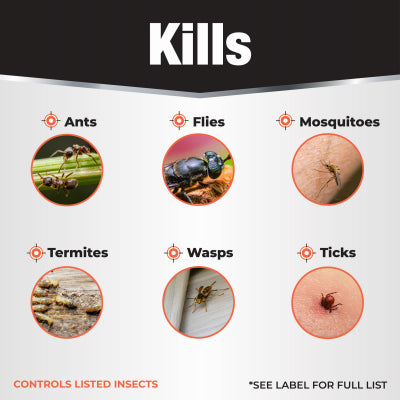
- Outdoor flying / biting pests — flies, mosquitoes, wasps, and ticks per the EPA “Kills” list on the current label. Apply as a perimeter / barrier spray to lawns, foundation edges, and deck areas during peak season
- Treats foundation perimeters, slab edges, crawl-space entries, exterior wall plates, deck framing, and the soil zones around them
Where to Apply (Outdoor Only)
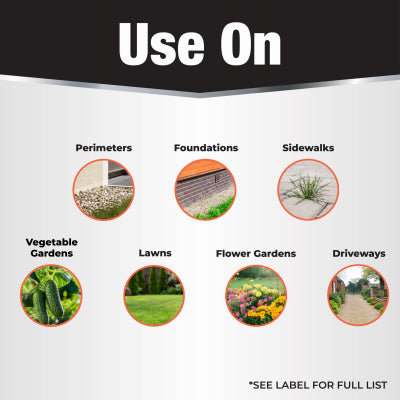
Per the manufacturer’s Use On guide on the current packaging:
- Perimeters — the outdoor band along exterior walls and foundations (the primary barrier-spray zone)
- Foundations — trench treatment for subterranean termites (see Application Notes below)
- Sidewalks, driveways, patios adjacent to the structure for perimeter ant + crawling-insect control
- Lawns — broadcast or perimeter per label rate for ticks, fleas, surface ants
- Flower gardens — perimeter and around ornamentals (apply when bees are not foraging; see Safety below)
- Vegetable gardens — PER LABEL DILUTION ONLY. Crop-by-crop dilution rates and pre-harvest intervals vary widely; always read the current product label on YOUR bottle before applying near edible crops
- Deck framing, fascia, railings — direct treatment of carpenter bee bore holes
- Crawl-space entries, plumbing penetrations, slab cracks — termite + carpenter ant entry points
Use Restrictions — READ FIRST
- RESIDENTIAL USE ONLY. Not for commercial / industrial / institutional applications.
- POST-CONSTRUCTION ONLY for termites. This product is for use around EXISTING structures. Not approved for pre-construction soil treatment (the pour-during-build use case requires a different product class).
- OUTDOOR APPLICATION ONLY for termites. Do not apply inside dwellings.
- WARNING signal word on the EPA label — lower acute hazard than products labeled CAUTION-with-specific-hazards, but still requires PPE and label-restricted application.
- Toxic to fish and aquatic invertebrates. Do not apply where runoff can reach water bodies. Do not contaminate water during cleanup or disposal.
- Toxic to bees and beneficial insects exposed to direct treatment or residue on blooms. Apply when bees are not foraging (early morning or late evening for flower-garden / lawn perimeter treatments).
- Crop / pre-harvest restrictions apply when used in vegetable gardens. Read the label.
How to Dilute & Apply (Termite Trench Treatment)
Mix ratio: per label, typical mix for termite trench is approximately 0.5% finished spray — about 1.6 oz concentrate per gallon of water. Always read the current product label on YOUR bottle for exact mix rates by application type; the label takes precedence over any third-party guidance.
- Trench the foundation perimeter — dig a narrow trench 6 in. deep along the foundation wall at grade.
- Apply 4 gallons of finished spray per 10 linear feet of trench, per the standard subterranean termite rate. The soil in the trench should be saturated.
- Backfill immediately after application, watering the backfill lightly to settle the chemical evenly through the soil column.
- Treat slab edges and entry points the same way — cracks in concrete, expansion joints, plumbing penetrations.
- Re-treat at the labeled interval (typically 5 years for subterranean termite trench applications) if soil has been undisturbed, or sooner if you've dug / re-graded / heavily irrigated the treated zone.
For carpenter ants and surface-foraging insects: mix per label rate (lower concentration) and spray as a perimeter band around the structure, paying attention to under-eave areas, deck edges, and known foraging trails.
For carpenter bees: apply directly into each bore hole (the round 3/8 in. entry holes in wood) using the diluted spray and a pin-stream nozzle. Plug the holes after treatment with caulk or wood filler to prevent re-tunneling.
For perimeter / flying-insect control: spray the labeled rate as a band on lawn perimeter, foundation edge, deck skirting, and under eaves. Re-apply per label interval (typically 30 days during peak season).
Safety & Handling
- Wear protective clothing — long pants, long sleeves, chemical-resistant gloves, eye protection. Wash work clothing separately.
- Keep out of reach of children and pets until spray has dried completely.
- Permethrin is highly toxic to cats if they ingest or are exposed to wet treatment. Keep cats indoors during application and until treated surfaces are fully dry.
- Do not apply when wind speed exceeds ~10 mph (drift risk) or directly before forecasted rain (runoff risk).
- Apply when bees are not foraging — early morning or late evening when bee activity is low, especially near flowering plants.
- Triple-rinse empty container and dispose per local hazardous-household-product regulations. Don't reuse the bottle for any other purpose.
Specifications
- Manufacturer: Bonide Products LLC
- Manufacturer part number: 568
- Net contents: 32 fl oz (946 mL)
- Formulation: liquid concentrate (dilute with water before application)
- Active ingredient: Permethrin 13.30% w/w
- Other ingredients: 86.70% (contains petroleum distillate)
- EPA Reg. No. 4-349-9086; EPA Est. No. 4-NY-1
- Approved uses: post-construction subterranean termite trench treatment, carpenter ant + carpenter bee control, perimeter spray for flies / mosquitoes / wasps / ticks / surface ants, wood-infesting insects around residential structures, ornamental and turf-perimeter applications per label
- NOT for: pre-construction soil treatment, indoor dwelling use (for termites), commercial / institutional facilities
- Country of origin: USA
- UPC: 037321005681
What’s in the Box
- One 32 fl oz (946 mL) bottle of Bonide Termite & Carpenter Ant Killer Concentrate
Compatible Accessories — Sold Separately
- 1- to 2-gallon pump sprayer for mixing and applying the diluted spray
- Pin-stream / crevice nozzle for carpenter bee bore-hole treatment
- Chemical-resistant gloves (nitrile, 4-mil or heavier)
- Safety goggles and respirator-grade mask for confined-space or windy-day applications
- Garden trenching shovel for the foundation-perimeter trench dig
- Wood filler or caulk for sealing carpenter bee bore holes after treatment
- Bonide carpenter ant / termite bait stations for combination IPM approach (chemical barrier + bait monitoring)
Stop by Garoppo’s to pick one up. Note: some EPA-registered insecticides have shipping restrictions to certain states — in-store pickup recommended for fastest fulfillment.